
Slide 1
 Germany
GERMAN FEDERAL CULTURAL HERITAGE POLICY
EHHF 2012 PUBLIC ENGAGEMENT WITH CULTURAL HERITAGE
NATIONAL COMMITTEE FOR MONUMENTS PROTECTION
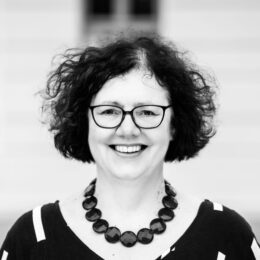

Ulrike Wendland, Director
Born in 1960, Dr Ulrike Wendland studied art history and obtained her doctorate in Hamburg. She then pursued postgraduate studies in heritage conservation in Bamberg and followed a traineeship at the Monument Protection Office in Hamburg. Ms. Wendland then joined the Technical Universities in Berlin and Zurich as a university assistant, before being appointed state conservator in Saarland and in Saxony-Anhalt from 2005-2020. She became managing director of the German National Committee for Heritage Conservation (DNK) in Berlin in 2020 and is member of several advisory boards, boards of trustees and professional associations.
ASSOCIATION OF STATE HERITAGE AUTHORITIES (VDL)

Thomas Drachenberg, Chair
Prof. Dr. Thomas Drachenberg was born in 1962 in Berlin. He studied art history at Humboldt University Berlin from 1984 to 1989, completing both the state examination and a diploma with a thesis on the architectural history of St. Nicholas’ Church in Brandenburg an der Havel. In 1989, he began working as a regional consultant in practical monument preservation at the Institute for Monument Preservation of the GDR and later at the Brandenburg State Office for Monument Preservation, where he has served as head of department since 2003 and, since 2012, as state conservator and deputy director. In 1999 he earned his doctorate at the Free University of Berlin with a dissertation on the architectural history of the city of Luckenwalde from 1918 to 1933.
Since 2021 he has been Deputy Chairman of the Association of Monument Preservation Authorities in the German States (VDL) and assumes the position of Chairman on June 1, 2026. He has held teaching appointments at BTU Cottbus (1999–2002), at the Free University of Berlin (2003–2019), and, since 2003, at the Technical University of Berlin in the master’s program in monument preservation, where he has served as an honorary professor since 2019.
He is the author of numerous publications on topics including the architectural history of modernism in the interwar period in Luckenwalde, Brandenburg an der Havel, and Burg Ziesar; monument preservation in churches; the revitalization of inner cities; the former KGB prison in Potsdam; questions of conservation and restoration ethics; the relevance of the Venice Charter; industrial heritage preservation in Germany; manor houses in the German-Polish border region; and German-Polish cooperation in heritage preservation.
A LITTLE BIT OF HISTORY
The first European Heritage Summit was organised in London from April 26 to 28, 2006 by Dr Simon Thurley, former Chief Executive of English Heritage. The mission of the summit was to bring together for the first time those responsible for Europe's cultural heritage, to create an opportunity to exchange experiences in heritage management and to initiate joint action. The first summit brought together 23 European countries, who agreed in the summit's final declaration to continue to meet annually in the form of a European Heritage Heads Forum. Each year, future host countries are chosen by mutual agreement at the annual meeting, so that the tradition can continue.

Permanent Secretariat - secretariat@ehhf.eu - Place Saint-Géry 23, 1000 Brussels
Cookie policy - Privacy policy - Copyright © European Heritage Heads Forum, All rights reserved.
Permanent Secretariat - secretariat@ehhf.eu
Place Saint-Géry 23, 1000 Brussels
Cookie policy - Privacy policy
Copyright © European Heritage Heads Forum
All rights reserved.